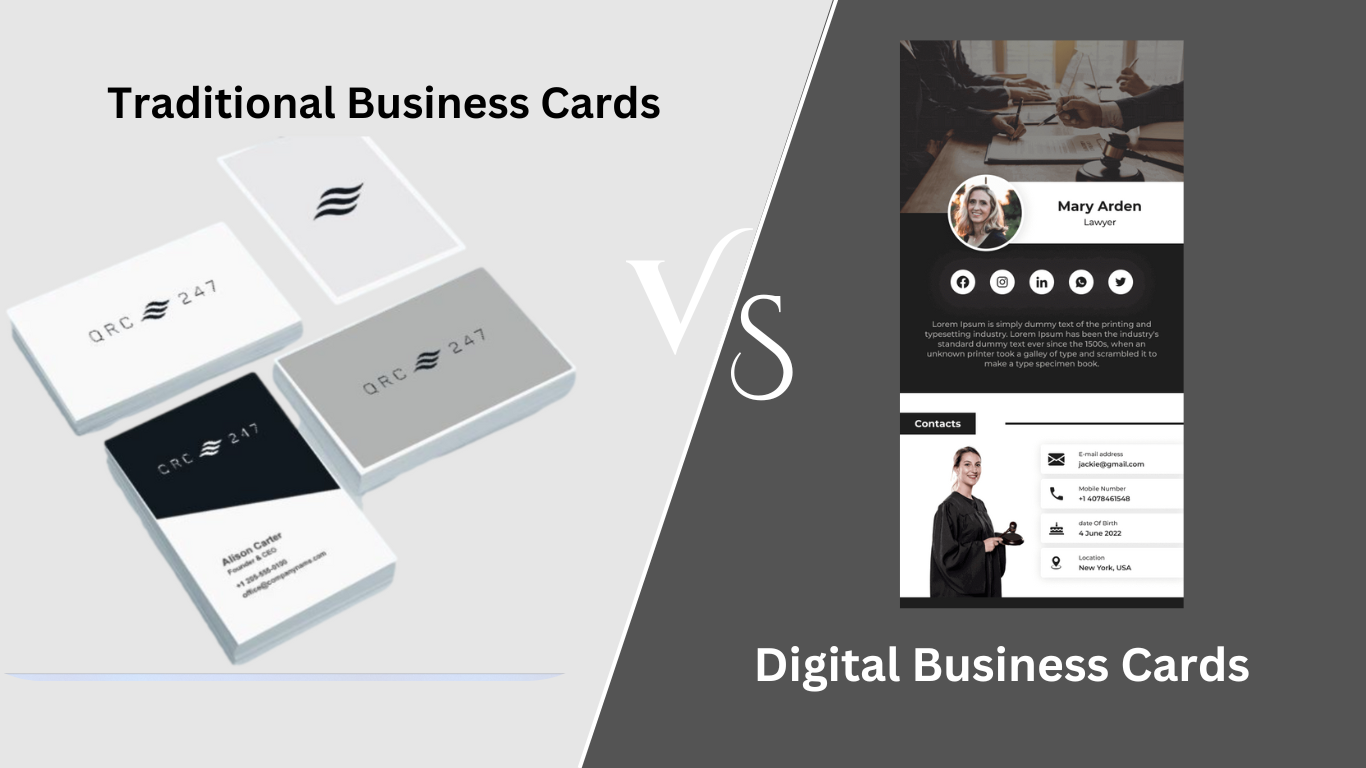
In the realm of professional networking, the debate between digital business cards and traditional business cards continues to spark discussion. Both options have their merits and drawbacks, but which one is truly more effective in today's digital age? Let's delve into the pros and cons of each to find out.
Traditional Business Cards
Pros:
Tangible and Tactile: There's something undeniably satisfying about exchanging physical business cards during a networking event or meeting. The tactile experience leaves a lasting impression on both parties involved.
Familiarity and Tradition: Traditional business cards have been a staple of professional networking for decades. Their widespread use and familiarity make them a trusted tool for making connections.
Easy Exchange: Handing over a business card is a simple and straightforward way to share contact information in face-to-face interactions, allowing for quick follow-ups and connections.
Cons:
Limited Information Storage: Traditional business cards are constrained by their physical size, limiting the amount of information that can be included. This often leads to a lack of detail and makes it challenging to convey a comprehensive professional identity.
Environmental Impact: The production and disposal of paper business cards have a significant environmental impact, contributing to deforestation and waste accumulation.
Prone to Loss or Damage: Paper business cards are susceptible to loss, damage from moisture or wear, and accidental disposal, potentially leading to missed opportunities for connections.
Digital Business Cards
Pros:
Eco-Friendly Alternative: Digital business cards offer a sustainable solution to the environmental concerns associated with traditional paper cards. By eliminating the need for paper production and disposal, they contribute to reducing carbon footprints.
Unlimited Information Storage: Unlike their paper counterparts, digital business cards have no physical constraints on the amount of information they can store. This allows professionals to include comprehensive details about their skills, experiences, and contact information.
Easy to Update and Share: Digital business cards can be updated and shared instantly, ensuring that recipients always have access to the most current information. This eliminates the need for costly reprints and ensures accuracy in professional communications.
Cons:
Dependency on Technology: Digital business cards rely on technology and internet access to function effectively. In environments where connectivity is limited or unreliable, they may not be as accessible or practical.
Potential Privacy Concerns: Sharing digital business cards may raise concerns about privacy and data security, especially if sensitive information is included. Professionals must be mindful of the information they share and take steps to protect their privacy online.
Lack of Tactile Experience: While digital business cards offer convenience and efficiency, they lack the tactile experience of exchanging physical cards. Some individuals may prefer the tangible nature of traditional cards for establishing personal connections.
Comparing Effectiveness
Determining which type of business card is more effective depends on various factors, including the preferences of the target audience, the context of networking interactions, and the level of technological literacy among professionals.
In many cases, a hybrid approach that combines the best of both worlds may be the most effective solution. Professionals can leverage traditional business cards for in-person interactions while supplementing them with digital counterparts for online networking and follow-ups.
In the ongoing debate between digital and traditional business cards, there's no one-size-fits-all answer. Both options have their advantages and disadvantages, and the choice ultimately depends on individual preferences and specific networking needs.
As the landscape of professional networking continues to evolve, it's essential to remain adaptable and open to exploring new tools and technologies. Whether you prefer the tactile experience of traditional business cards or the convenience of digital alternatives, the goal remains the same: to make meaningful connections and foster professional relationships.